Join the list and get aligned design tips, mindset inspo, and business glow-up vibes straight to your inbox.

Your Booking App Is Not Your Website (And That’s Costing You Clients)

5 min read · Business Growth · Website Strategy

If you’re an esthetician, lash artist, or hairstylist running your business on GlossGenius or Booker alone — this one’s for you, babe.
Let’s paint a picture. You just finished your esthetics program, you’re licensed, you’re excited, and you’re ready to build your clientele. You set up your GlossGenius profile, post a few reels, and wait for the bookings to roll in.
And at first? It actually works! A few friends book, a few referrals trickle in. Amazing. So you think — why would I ever need a website? The app handles everything!
Here’s the thing, though. That strategy works great for a while. But if you’re dreaming of a full schedule, consistent new clients, and the kind of beauty business that feels legit and grows on its own — your booking app alone is going to hit a wall. A hard one.
Let’s talk about why.
What Your Booking App Actually Is
Apps like GlossGenius, Booker, and Vagaro are genuinely incredible tools. They handle your scheduling, payments, client reminders, and they even give you a little profile page to share your services. For what they do, they’re amazing.
But here’s the honest truth: that profile page is not a website. It’s a booking portal. And those are two very different things.
Think about the last time you visited a booking app page for a service provider. It probably had a profile photo, a list of services with prices, and a big “Book Now” button. That’s it. There’s no room to tell your story, explain your specialty, show off your gorgeous before-and-afters, or give potential clients the warm, fuzzy “I found my person” feeling.
The Description Field Problem Is Real
Here’s something that doesn’t get talked about enough: those little service description boxes in booking apps? Tiny. Like, embarrassingly tiny. You get maybe a sentence or two to describe a 90-minute custom facial that took you years to perfect.
Compare that to a website, where you can dedicate an entire section to explaining your signature treatment — what makes it different, what skin concerns it addresses, what clients can expect, and why they should book it over anyone else’s version. That’s the kind of detail that converts a browser into a buyer.
When your only online presence is a list of services and prices, you’re essentially handing potential clients a menu with no context. And in the beauty industry, where trust is everything, that’s a really tough sell to someone who has never met you.
Google Doesn’t Know You Exist
Okay, here’s the part that might actually surprise you — and it’s a big deal.
When someone opens Google and searches “lash artist near me” or “best facial for acne in [your city],” Google is crawling websites to figure out who to show. Your GlossGenius page or Booker profile? It’s mostly invisible to that search. Booking apps are essentially closed environments — Google can’t fully read them the same way it reads a proper website with pages, blog posts, and metadata.
What this means for you: you don’t exist in Google search results. All those people in your city actively looking for someone who does exactly what you do? They’re finding your competitors — the ones who have websites — while you’re waiting for your next referral to come through Instagram DMs.
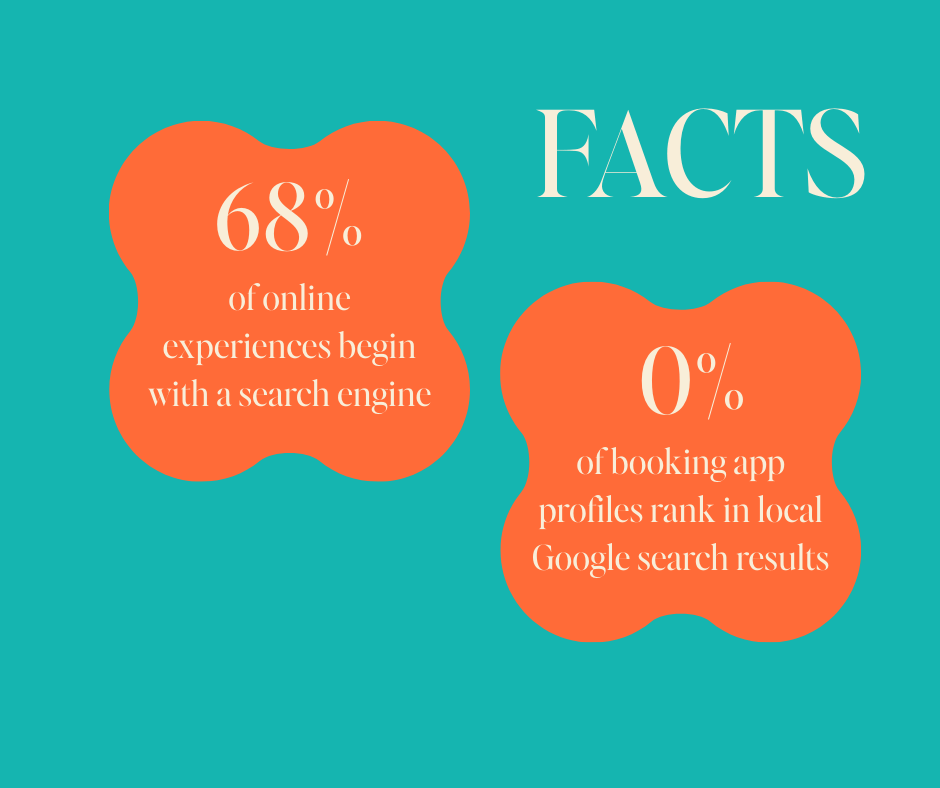
This is called organic search traffic, and it is one of the most powerful ways to grow a service business. But you can only tap into it with a real website — ideally one with some thoughtfully written content (hello, blog posts!) that Google can actually read and recommend.
The “Just Instagram It” Trap
Relying on Instagram + a booking app is incredibly common in the beauty industry. And look, Instagram is a wonderful tool for showing your work and connecting with clients. But it has a major vulnerability that most new beauty pros don’t think about until it’s too late:
You don’t own it.
Accounts get hacked. Algorithms change overnight. Platforms can go down (remember that Facebook outage?). If your entire business lives on a social platform and a third-party app, your business is renting, not owning. A website is the one digital home that is completely, 100% yours.
What a Website Actually Does For You
A beautiful website helps you…
- Show up in Google when locals search for your services
- Tell your story and build trust with brand-new visitors who’ve never heard of you
- Showcase your portfolio, credentials, and signature services in full detail
- Share your personality so clients feel connected before they even book
- Write blog posts (hi, Pinterest!) that drive traffic to your booking link for months and years
- Look professional enough to justify premium pricing
- Grow your email list so you own your client relationships
- Stand out from every other lash artist or esty in your area still relying on just an app
Here’s a different way to think about it: the earlier you build your website, the sooner Google starts to trust it. Google takes time to index and rank websites — often 3 to 6 months before you start seeing real organic traffic. That means if you wait until you’re “ready,” you’re also delaying the point where new clients start finding you automatically.
This is the most common pushback, and it’s totally fair. Building a website feels like a big investment when you’re still building clientele and every dollar counts.
But I’m Just Starting Out — Do I Really Need One Now?
The beauty businesses that seem to blow up out of nowhere? They planted the seeds early. The website, the Pinterest strategy, the blog posts — those are the seeds.
A quick reality check on the timeline:
Build your website at month 1 → Start getting Google traffic around month 4-6 → By the end of your first year, new clients are finding you without you doing a thing. That’s the magic of a website working in the background.
Build your website at month 18 (when you “feel ready”) → Your competitors who started earlier already own those Google results. You’re starting from scratch while they’re reaping the rewards.
What About the Cost?
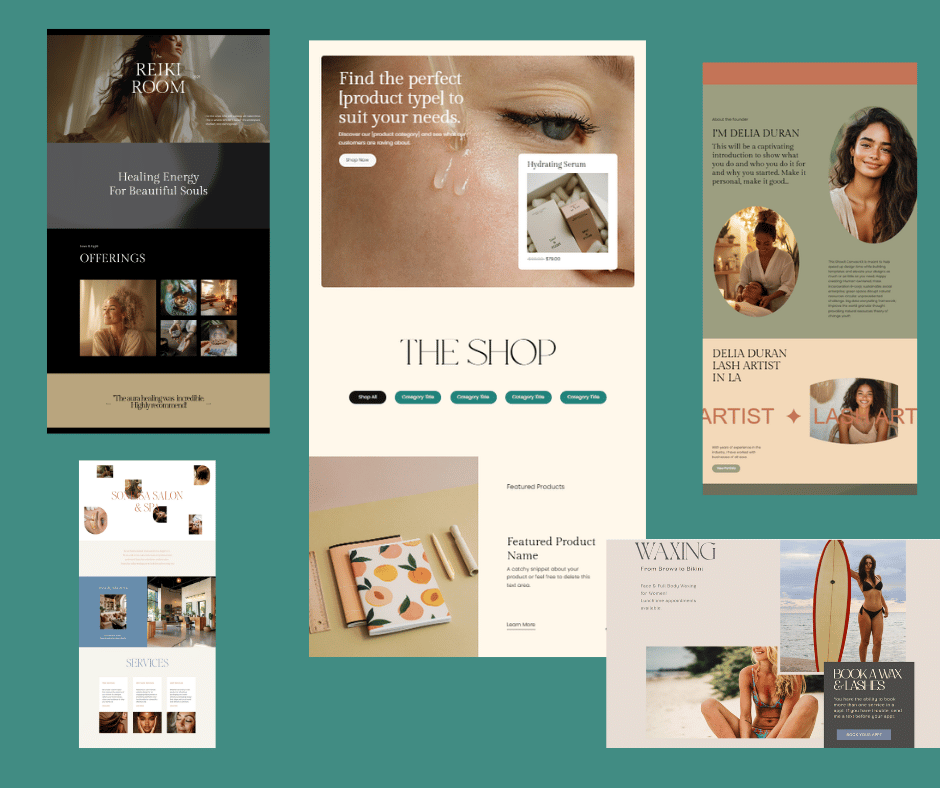
Totally valid question. The good news is you don’t have to hire someone to build a custom website from scratch to get started. There are beautifully designed website templates made specifically for beauty professionals that you can customize yourself in a weekend — no coding, no tech overwhelm, no blank-page panic.
A well-designed template gives you all the structure and beauty of a professional site, with room to add your own photos, services, personality, and booking link. It’s one of the smartest investments you can make in your business because — unlike a sponsored post or a paid ad — it keeps working for you indefinitely.
And when you’re ready to grow even further? That’s when a custom brand and website design can take everything to the next level — turning a pretty website into a full client-attracting machine that truly reflects who you are and who you serve.
Ready to have a website that actually works for you?
Browse our beauty business website templates — designed specifically for estheticians, lash artists, and hairstylists who are ready to grow.

